
course-lesson

Building and Testing Your First Model
A step-by-step walkthrough of training a prediction model, evaluating whether it works, and interpreting the results, explained in plain English with no math required.
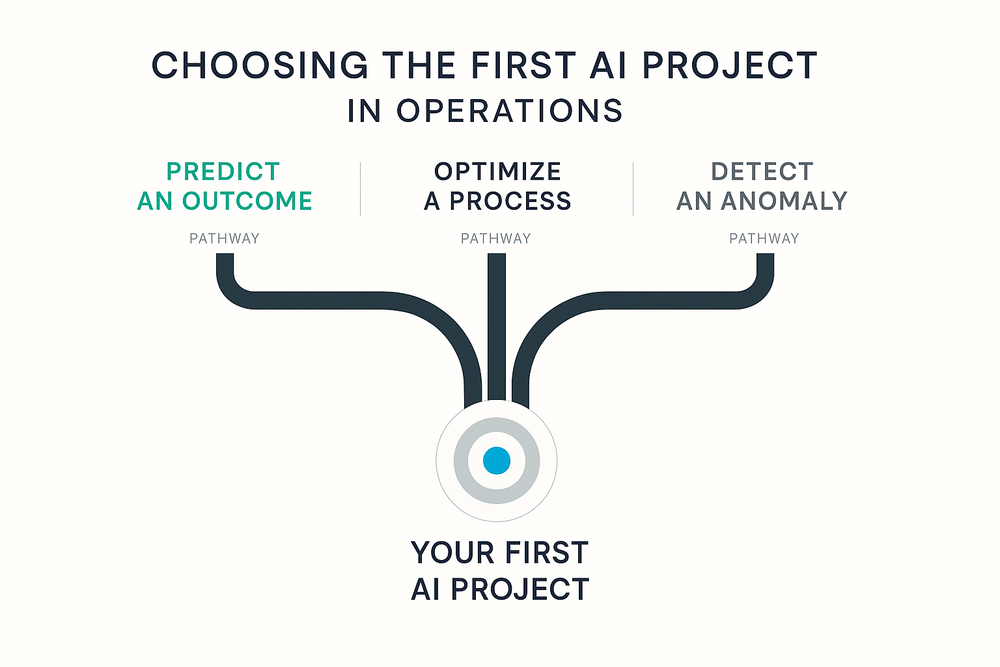
Choosing Your First AI Project
How to pick a problem that AI can actually solve, frame it as a prediction the system can learn from, and set yourself up for a first project that delivers visible value.
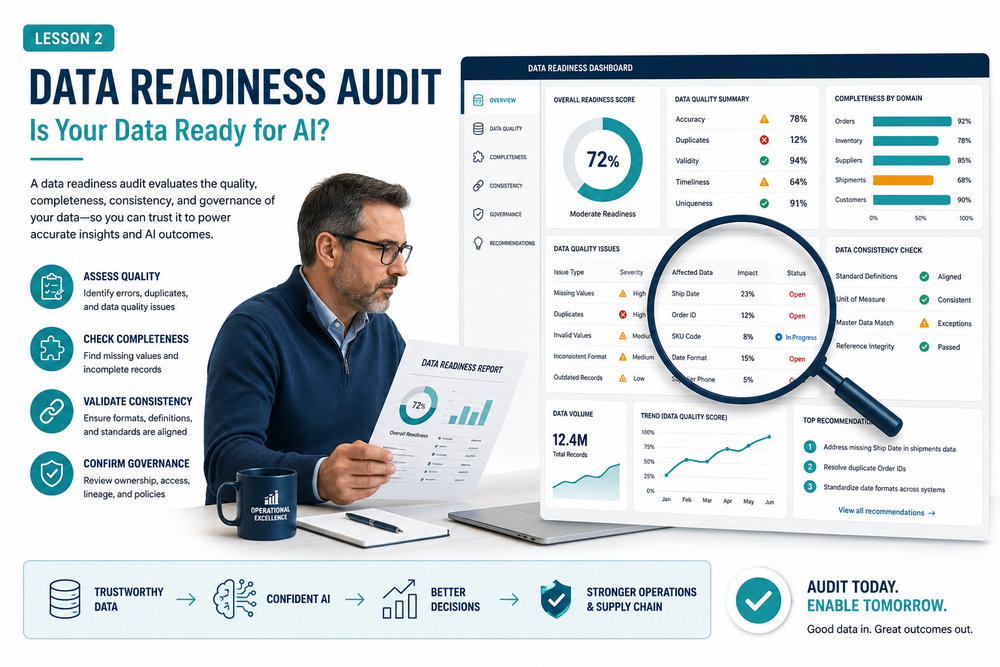
Is Your Data Actually Ready? A Practical Audit
A hands-on guide to auditing your operations data, finding the gaps that matter most, and deciding which AI project to tackle first based on what your data can actually support.
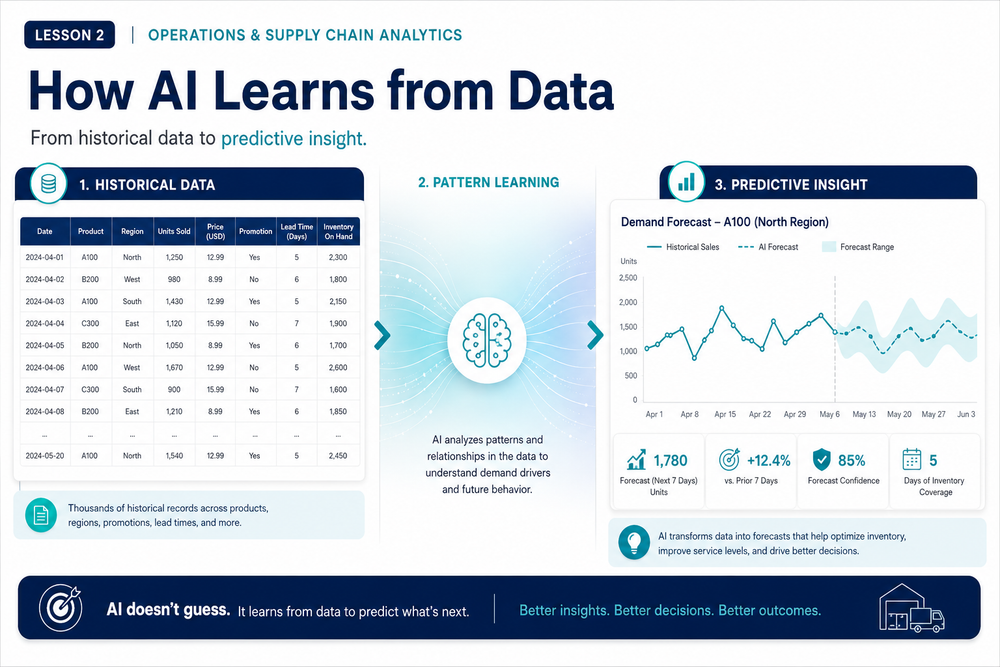
What "Learning from Data" Actually Means
A practical explanation of how AI systems learn from historical data, what that process looks like in an operations context, and why your existing data is the raw material for better predictions.
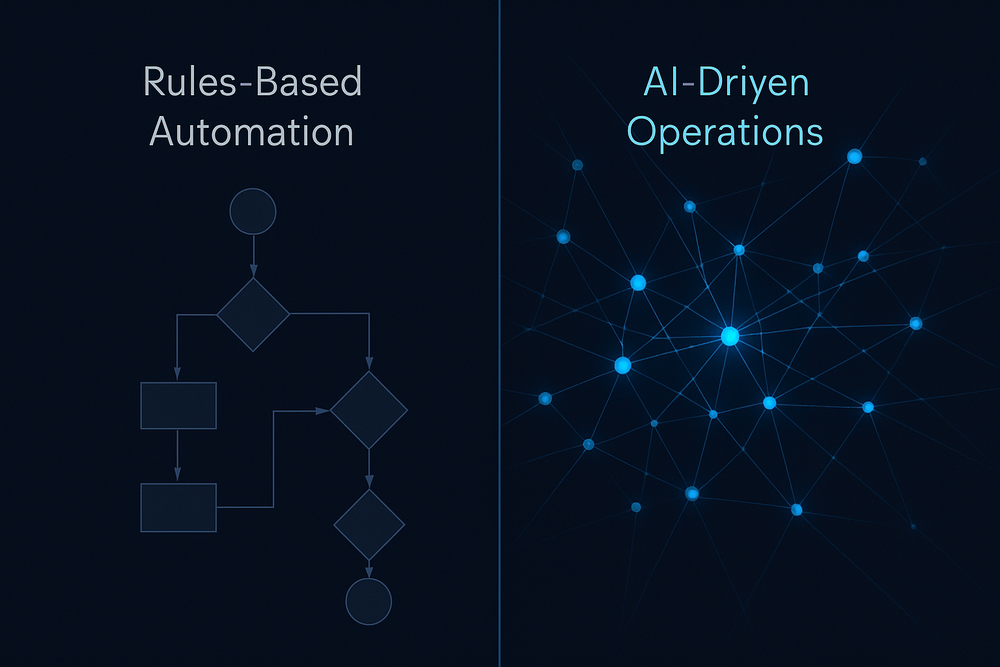
The Difference Between Rules-Based Automation and AI
If you have worked in operations for any length of time, you have already used automation. This lesson explains the fundamental distinction between the rules-based systems that power modern operations and the AI systems that are about to raise the ceiling.

Getting Started: Building Your AI Toolkit
A concrete action plan to start using AI in your own work: how to choose a tool, a thirty-day path, the habits that turn a beginner into a capable user, and a grounded look at AI and your career.

Using AI Responsibly: Privacy, Data, and Ethics
What is safe to share, what is not, how consumer and enterprise tools differ on data, and the everyday ethics (copyright, disclosure, accountability) of using AI at work without getting into trouble.

Knowing the Limits: Hallucinations, Bias, and Trust
AI can be confidently wrong. Learn why hallucinations happen, how bias gets baked in, what a training cutoff means, and a simple, reliable habit for deciding when (and how) to verify what it tells you.

AI Across Industries: Real-World Examples
How AI is actually being used in healthcare, finance, retail, law, manufacturing, and the creative fields, with concrete examples, plus the four recurring patterns that let you spot opportunities in your own world.

Where AI Helps in Everyday Work
Concrete, practical ways people in non-technical roles use AI today, with specific examples, a simple test for which tasks are a good fit, and the workflow habits that get the most value.

AI Agents: When Software Takes Action
Beyond chat, a new kind of AI can take steps on your behalf: searching, planning, calling tools, and looking things up. Here is what "agents," "tool use," and "RAG" mean in plain language, and how to think about them safely.

Talking to AI: The Art of Prompting
A prompt is just an instruction, but the technique runs deep. Learn zero-shot and few-shot prompting, chain-of-thought, system instructions, and repeatable patterns to get far better results, with examples you can copy today.