
Intro to AI for non-technical backgrounds
A plain-English, twelve-part introduction to how modern AI works, where it helps, and how to use it well, written for people in business, operations, and the arts, no coding required.
Getting Started: Building Your AI Toolkit
A concrete action plan to start using AI in your own work: how to choose a tool, a thirty-day path, the habits that turn a beginner into a capable user, and a grounded look at AI and your career.
Using AI Responsibly: Privacy, Data, and Ethics
What is safe to share, what is not, how consumer and enterprise tools differ on data, and the everyday ethics (copyright, disclosure, accountability) of using AI at work without getting into trouble.

Knowing the Limits: Hallucinations, Bias, and Trust
AI can be confidently wrong. Learn why hallucinations happen, how bias gets baked in, what a training cutoff means, and a simple, reliable habit for deciding when (and how) to verify what it tells you.

AI Across Industries: Real-World Examples
How AI is actually being used in healthcare, finance, retail, law, manufacturing, and the creative fields, with concrete examples, plus the four recurring patterns that let you spot opportunities in your own world.
Where AI Helps in Everyday Work
Concrete, practical ways people in non-technical roles use AI today, with specific examples, a simple test for which tasks are a good fit, and the workflow habits that get the most value.

AI Agents: When Software Takes Action
Beyond chat, a new kind of AI can take steps on your behalf: searching, planning, calling tools, and looking things up. Here is what "agents," "tool use," and "RAG" mean in plain language, and how to think about them safely.
Talking to AI: The Art of Prompting
A prompt is just an instruction, but the technique runs deep. Learn zero-shot and few-shot prompting, chain-of-thought, system instructions, and repeatable patterns to get far better results, with examples you can copy today.

The Generative AI Revolution
Why tools like ChatGPT, Claude, and image generators suddenly feel different, what tokens and context windows are, how these models are actually built, and the one insight that explains both their magic and their mistakes.

Machine Learning, Deep Learning, and Neural Networks
You keep hearing these three terms. Here is the plain-language difference, what a "parameter" is, how a network learns through many layers, and why deep learning is behind almost every recent breakthrough.

How Machines "Learn": A Plain-English Guide
No math, no code. A friendly but deeper explanation of training data, features, labels, the three main styles of learning, and what really goes on when a machine "learns" something.
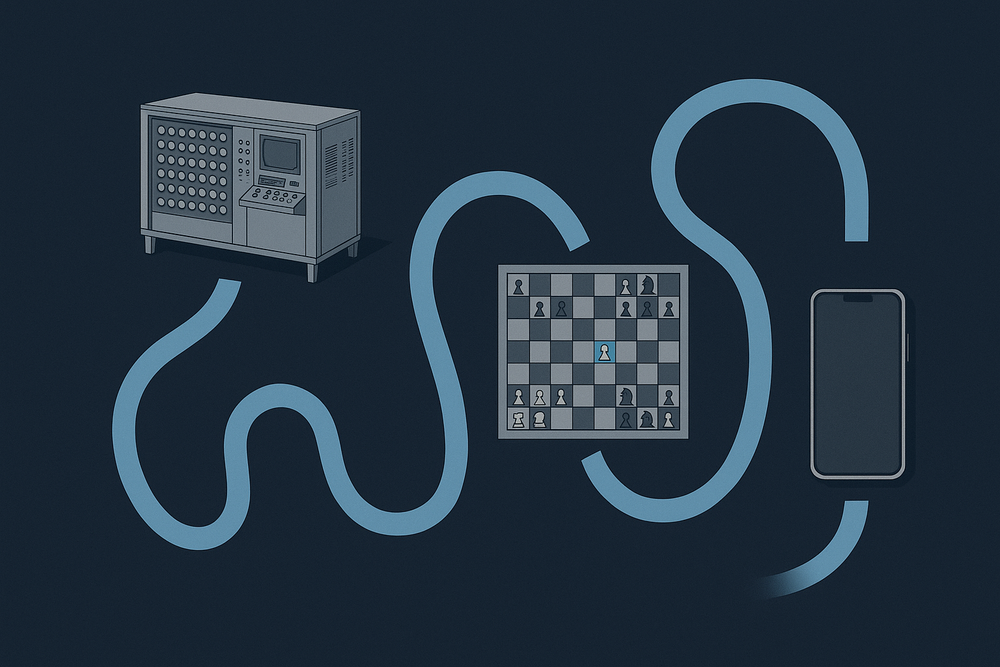
A Short History of AI: How We Got Here
AI did not appear overnight. A brief, friendly tour of the decades of ideas, winters, and breakthroughs (Dartmouth, perceptrons, expert systems, Deep Blue, ImageNet, transformers) that led to the tools everyone is talking about today.
What AI Actually Is (and Isn't)
Cut through the hype and the science fiction. A clear, jargon-free definition of artificial intelligence, the different things people mean by the word, how it differs from ordinary software, and what it can really do today.